A Historic Week for Women’s Health and NP’s
This week is already monumental for two reasons close to my heart.
First, it’s National Nurse Practitioner Week (November 9-15), celebrating NPs as “Trusted Voices, Proven Care.” As both a nurse practitioner and registered dietitian with more than 25 years of experience, I’m proud to be part of a profession that continues to advocate for removing barriers to practice so we can care for patients to the full extent of our education and experience.
Also this week, the FDA announced the initiation of the removal of misleading “black box” warnings from specific hormone replacement therapy products for menopause. After more than two decades of fear and misinformation stemming from the 2002 Women’s Health Initiative study when some results were misrepresented, we’re reading the results correctly for menopausal and perimenopausal women from an evidence-based medicine perspective. While the announcement was specific to menopause, many women in perimenopause, both after careful assessments, utilize these hormone therapy options.
Why My New Course Exists
Here’s what I’ve witnessed over the past six years treating women in perimenopause and menopause: eating disorder symptoms that were stable for years suddenly resurface. Anxiety that was manageable becomes debilitating. Body image struggles intensify as bodies change in ways that feel out of control. Too often, primary care clinicians, mental health providers and dietitians caring for these women don’t have the knowledge to connect the dots between hormone fluctuations and what’s happening with eating disorders, mood, and recovery. I’ve had research backing this on my website, available for free for a while now, and over the summer was quoted in National Geographic and Apple News Plus on this topic (both need paid subscriptions to access).
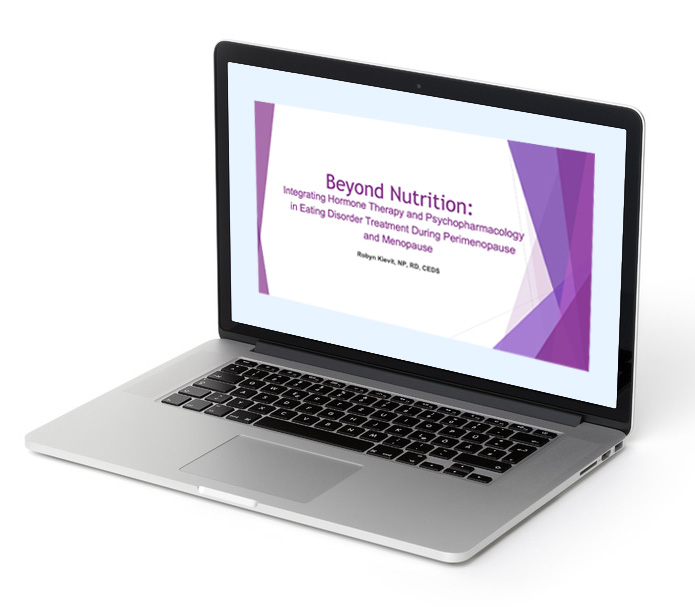
I created Beyond Nutrition: Integrating Hormone Therapy and Psychopharmacology in Eating Disorder Treatment During Perimenopause and Menopause to fill this gap. With this week’s FDA announcement, this education is incredibly timely and critical. Currently this course is geared for dietitians treating women in the perimenopause and menopause phases of life with additional continuing education credits to follow for other disciplines.
What You’ll Learn
This 2-hour course covers everything I wish I’d known years ago when I first started seeing these patterns. We’ll dive into the stages of perimenopause and menopause and how declining estrogen, progesterone, and testosterone impact mental health, eating disorder symptoms, and body image disturbance. You’ll learn what hormone therapy is FDA-approved for, the types available (including non-hormonal options), and who can and cannot use these treatments safely.
The clinical integration section is where theory meets practice. Participants will learn when to recommend hormone therapy evaluation for eating disorder clients, how to tailor nutrition and movement recommendations without triggering eating disorder behaviors, and the critical connections and contraindications between hormone therapy and psychopharmacology.
Because I believe in learning through real cases, I walk you through Sarah’s treatment journey over five years—how we validated body changes while supporting eating disorder recovery, addressed genitourinary syndrome, and reframed conversations about perimenopause and menopause to support her recovery.
What’s Included
When you sign up, you get:
* A 2-hour 11-minute audio recording with detailed accompanying slides
* Two required articles to deepen your understanding
* A comprehensive list of resources and references
* A 30-minute consultation call with me (required to receive your CPEs—and I suspect many of you will use this time to talk about your own clients or even your own personal treatment journey)
* 3.5 CPEs from CDR for dietitians
Early Launch Pricing
Folks who sign up now get early launch pricing of $190. After the early launch period ends, the price goes up to $199. I’m also offering a group practice discount to dietitians of 6 or more also increasing after the early launch period.
This course is mainly for dietitians right now as the CPEs are specifically for RDs, but the knowledge is applicable to anyone working with this population.
If you’ve been feeling uncertain about how to support your perimenopausal and menopausal clients with eating disorders—or if you’re in perimenopause or menopause yourself and navigating this alongside your work—this course is for you. I’ve got you.
Sign up today by clicking HERE.